A child's vocabulary at age 5 is one of the strongest predictors of their reading ability at age 10. Yet most parents wait until school to think about vocabulary - a full three years after the critical window opens. The good news: you do not need flashcards, expensive toys, or hours of structured learning. These ten activities work in ordinary daily life, require no special materials, and are genuinely enjoyable for children aged 3 to 6.
Why vocabulary matters so early
Vocabulary is not just about knowing words. It is the raw material of thought. A child who knows the word frustrated can recognise and label their emotion rather than acting it out. A child who knows evaporate grasps a concept that a child without the word simply cannot hold in their mind with any precision.
Research from the University of Kansas tracked children's vocabulary from age 3 through school age and found that children from language-rich environments knew twice as many words as peers from language-poor ones - and that gap compounded over time rather than closing. The activities below are designed for the 3–6 age range, when the brain is acquiring new words at a rate of 5 to 10 per day with the right exposure.
The 10 activities
1. The Word of the Day ritual
Each morning, introduce one interesting word - not a basic word, but a real, useful one. Try enormous, dazzling, furious, or peculiar. Use it naturally across the day. At dinner, ask your child to use the word in a sentence. Children remember words they have practiced using more than words they have only heard.
2. Narrate everything
While cooking, cleaning, or commuting, narrate what you are doing using rich vocabulary. Your child is building a mental dictionary of words attached to real experiences, which is exactly how long-term vocabulary is acquired.
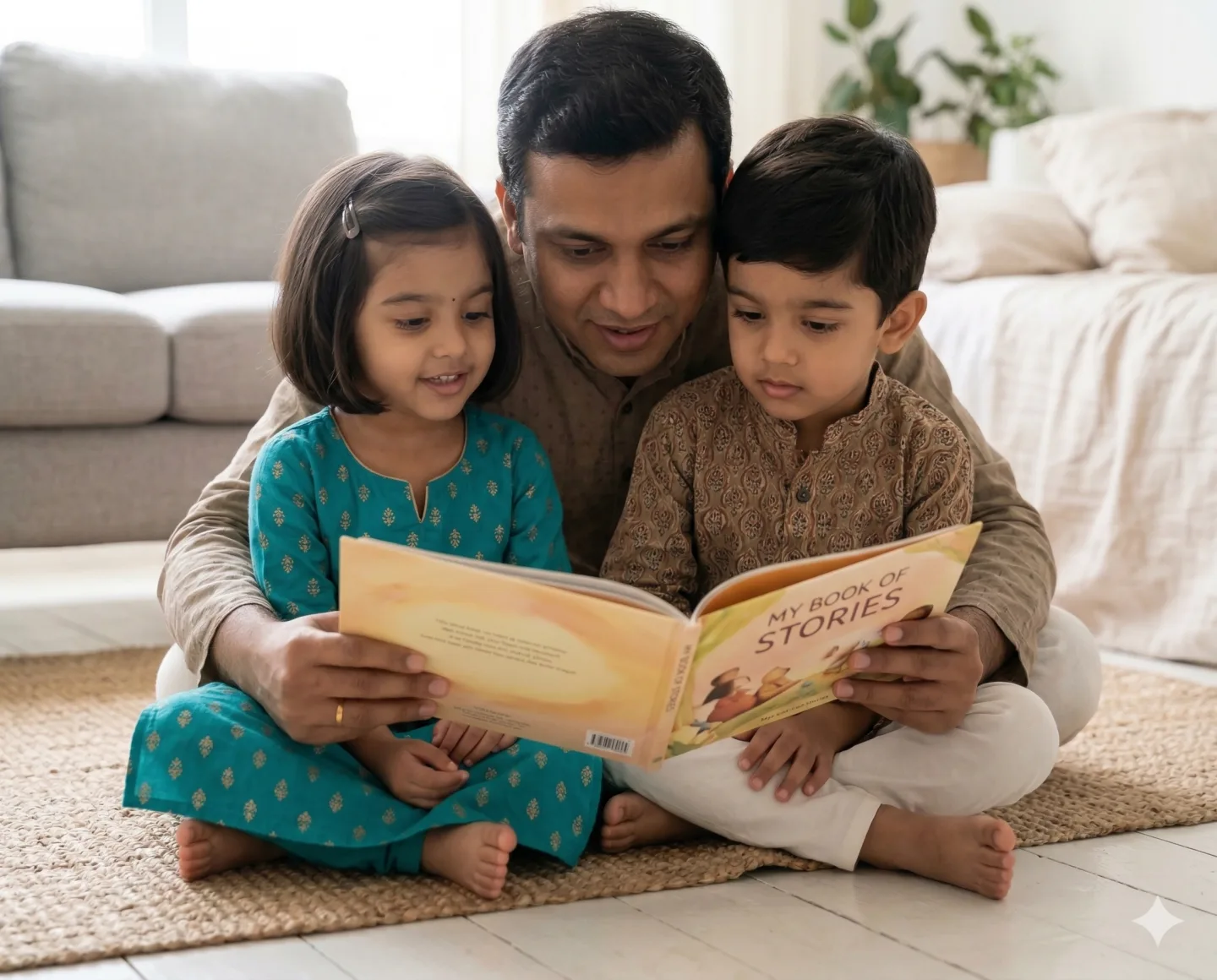
3. Read aloud - and pause often
Reading to your child is the single most evidence-backed vocabulary activity available. But the research is specific: it is the conversation around the book that produces vocabulary gains, not the reading itself. Stop when you encounter an interesting word. Ask: what do you think this word means? Let them guess before explaining.
4. Play the Describe It game
Pick any object in the room and ask your child to describe it using five different words. Start with colours and shapes, then push for texture, temperature, and comparison. This game builds descriptive vocabulary while developing observational skills simultaneously.
5. Introduce synonyms playfully
When your child uses a simple word, offer an upgrade as a question: Happy - or maybe delighted? What is the difference? Children find synonym exploration genuinely interesting at this age. Keep a word family notebook together if your child enjoys it.
6. Story retelling
After reading or watching something, ask your child to retell the story to someone who was not there. Retelling requires active retrieval of vocabulary and sequence. Children who retell stories regularly have measurably stronger narrative vocabulary than those who only receive stories passively.
7. Cooking together
The kitchen is one of the richest vocabulary environments in the home. Measure, mix, pour, simmer, sieve, blend - these are precise action words. Cooking with your child gives them vocabulary for measurement, texture, taste, quantity, and time all in one activity.
8. Nature walks with narration
Outdoors, children encounter vocabulary that simply does not exist indoors: foliage, bark, canopy, horizon, pebble, stream. Ask them to name five things they can see, three they can hear, and one they can smell. Sensory vocabulary is among the most underrepresented category in young children's language - and the easiest to build through experience.
9. Conversation at mealtimes - with real topics
Mealtime conversation is a natural vocabulary incubator, but only if the topics are substantive. Avoid yes/no questions. Ask: if you could change one thing about our neighbourhood, what would it be and why? The complexity of the question stretches the vocabulary required to answer it.
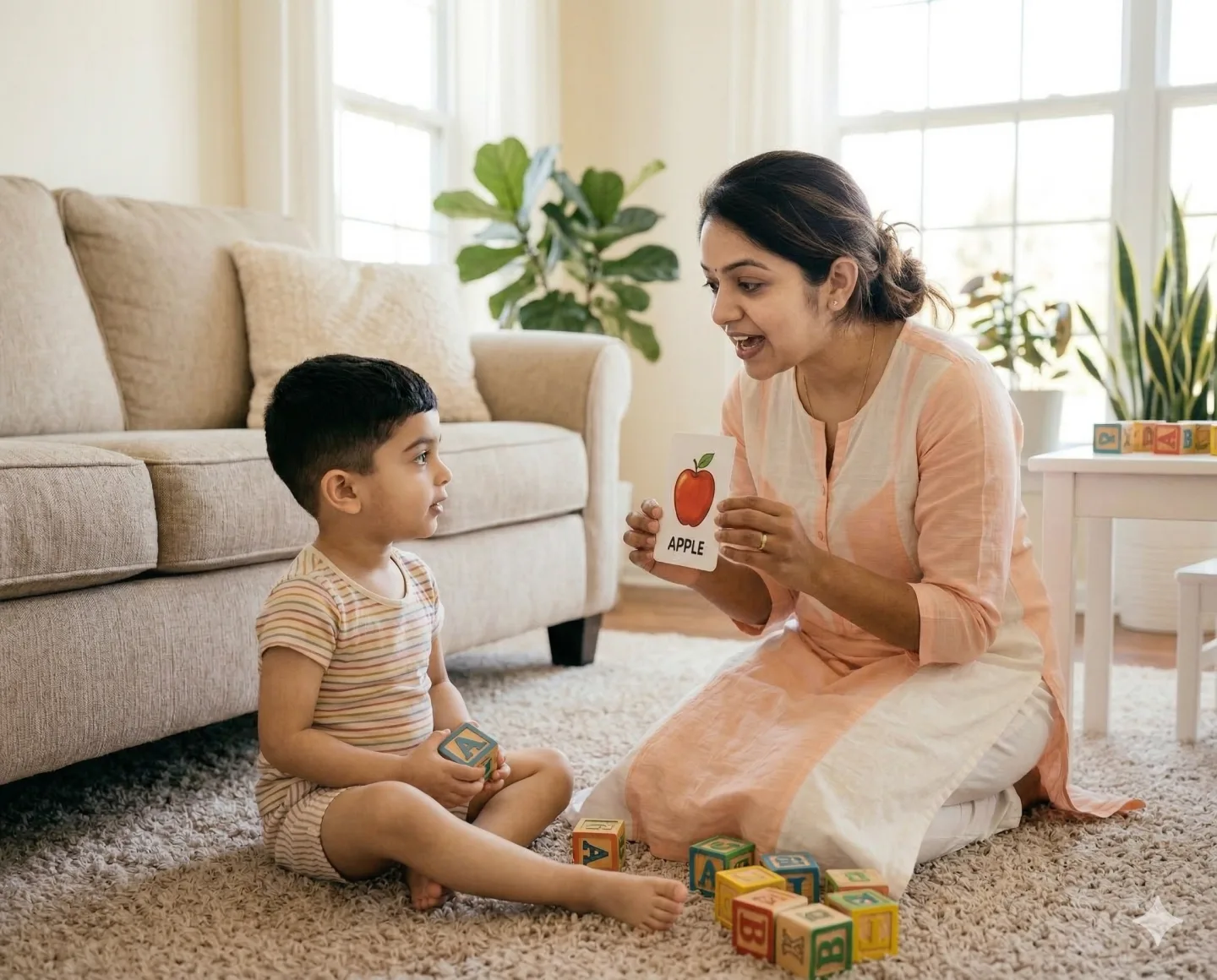
10. Use an interactive conversation partner
Adaptive conversation companions designed for children are specifically built to expand vocabulary through natural dialogue. Open questions, new words introduced in context, and following a child's interests - this is precisely how vocabulary acquisition works most efficiently.
Key insight: Children do not learn vocabulary from definitions. They learn it from repeated exposure in meaningful contexts. Every activity above is designed to create that context rather than simply present words in isolation.