If your child is not talking as much as other children their age, you are likely spending a significant amount of energy worrying about it. This guide explains what late talking actually means, when it is cause for concern, and - most importantly - what you can do at home right now regardless of the cause.
What is a late talker?
A late talker is a young child - typically between 18 months and 3 years - who has fewer words than expected for their age, but whose hearing, play skills, motor development, and social interaction are otherwise developing typically. This distinction matters. A child who is not talking but is also not making eye contact or engaging in play may have a different underlying issue that requires specialist assessment.
| Age | Expected vocabulary | When to seek advice |
|---|---|---|
| 12 months | 1–3 words (mama, dada) | No single words by 16 months |
| 18 months | 10–20 words | Fewer than 6–10 words |
| 2 years | 50+ words, 2-word phrases | Fewer than 50 words, no phrases |
| 3 years | 200–300 words, sentences | Difficult to understand at home |
Why do some children talk later than others?
Late talking has multiple causes, and in many cases there is more than one factor at play. Common contributors include:
- Family history - late talking runs in families. If a parent or sibling was a late talker who caught up, there is a higher chance the child will too.
- Birth order - younger siblings who have older children communicating for them sometimes have less need to develop language quickly.
- Bilingual exposure - children learning two languages may appear to have a smaller vocabulary in each language separately, even though their total vocabulary across both is typical.
- Limited language input - children need to hear rich, varied language addressed to them personally. Television does not substitute for direct conversation.
- Hearing issues - even mild hearing loss can affect language development significantly. A hearing screening is always worthwhile if language is delayed.
What you can do at home right now
Follow their lead
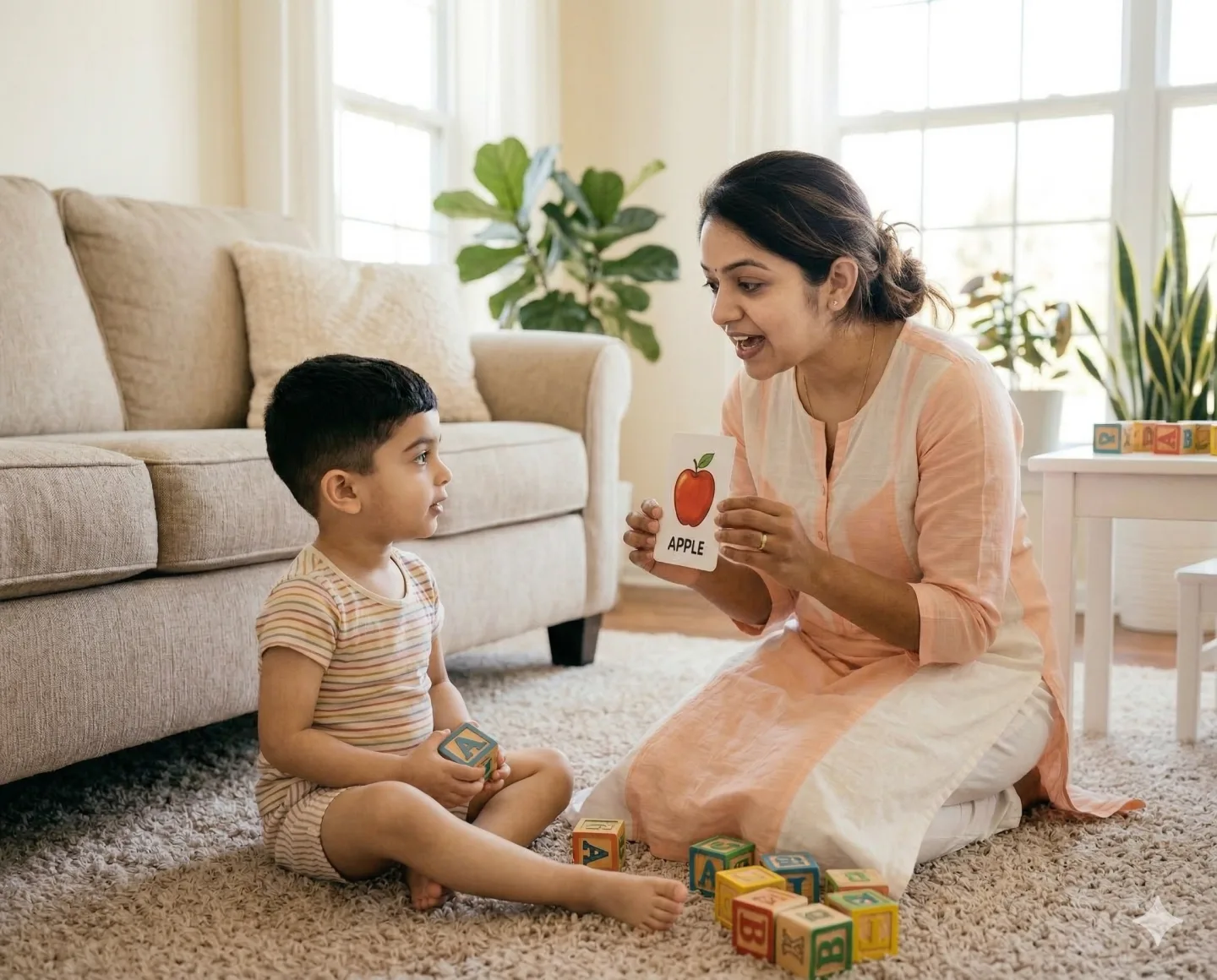
Join whatever your child is paying attention to and talk about it. If they are pushing a car, narrate: Push. The red car goes fast. This technique - called parallel talk - has strong research backing as a language stimulation strategy.
Expand what they say
When your child says a single word or short phrase, gently expand it. Child says Juice - parent responds: More juice? You want more orange juice. You are not correcting them - you are modelling the next level of language just above where they currently are.
Reduce questions, increase comments
Questions put children on the spot. Comments invite without demanding. Instead of What is that? try Oh, that is a big elephant. You will often find children comment back - without the pressure of a question requiring an answer.
Create communication opportunities
Put a favourite toy just out of reach. Offer choices between two items and wait. Pause expectantly in a familiar routine. These moments create a genuine need to communicate - which is the natural driver of language development.
Important: If your child is 2 years old and has fewer than 50 words, or is 3 years old and is difficult to understand, a referral to a speech-language pathologist is strongly recommended. These timelines reflect when intervention produces the best outcomes.