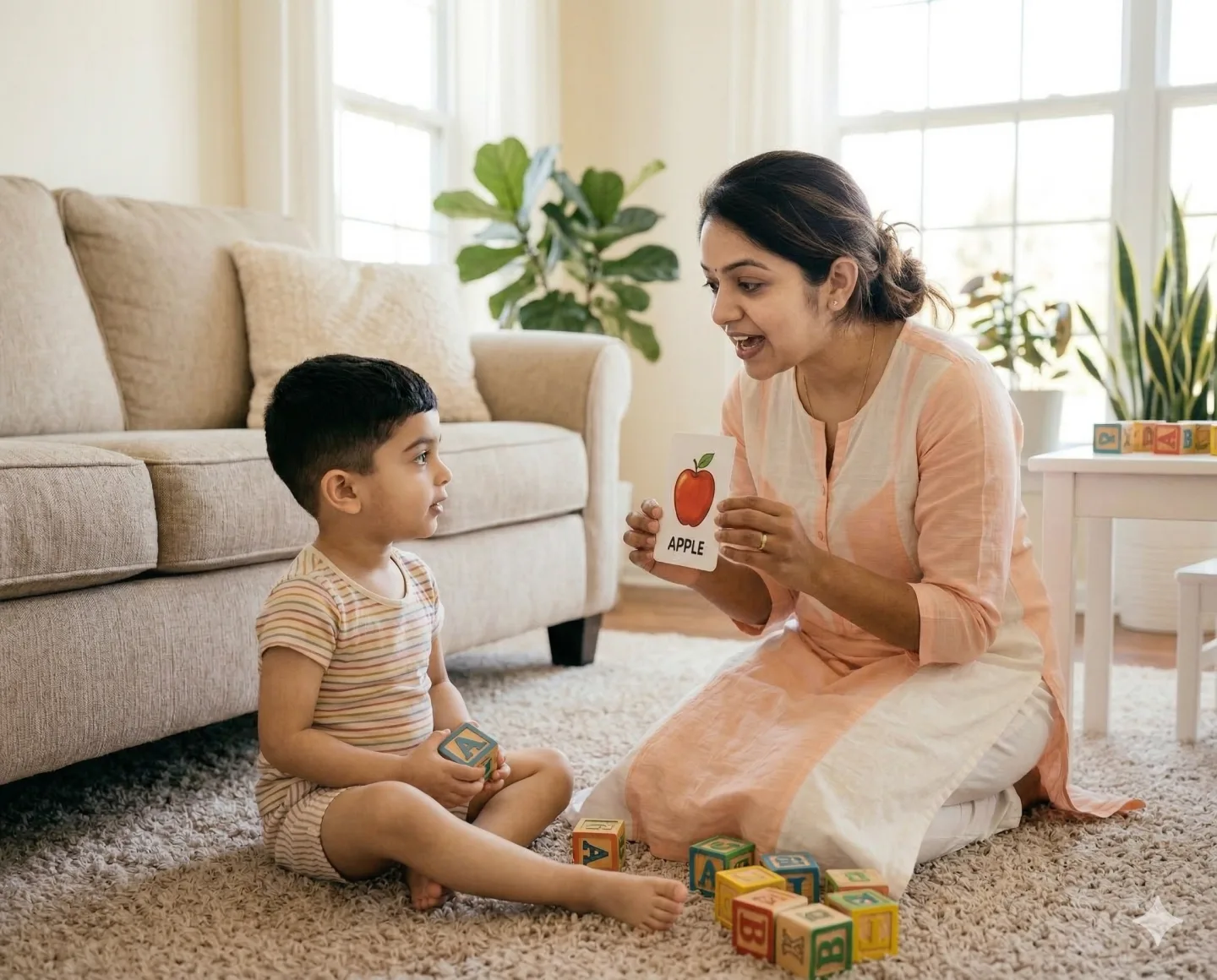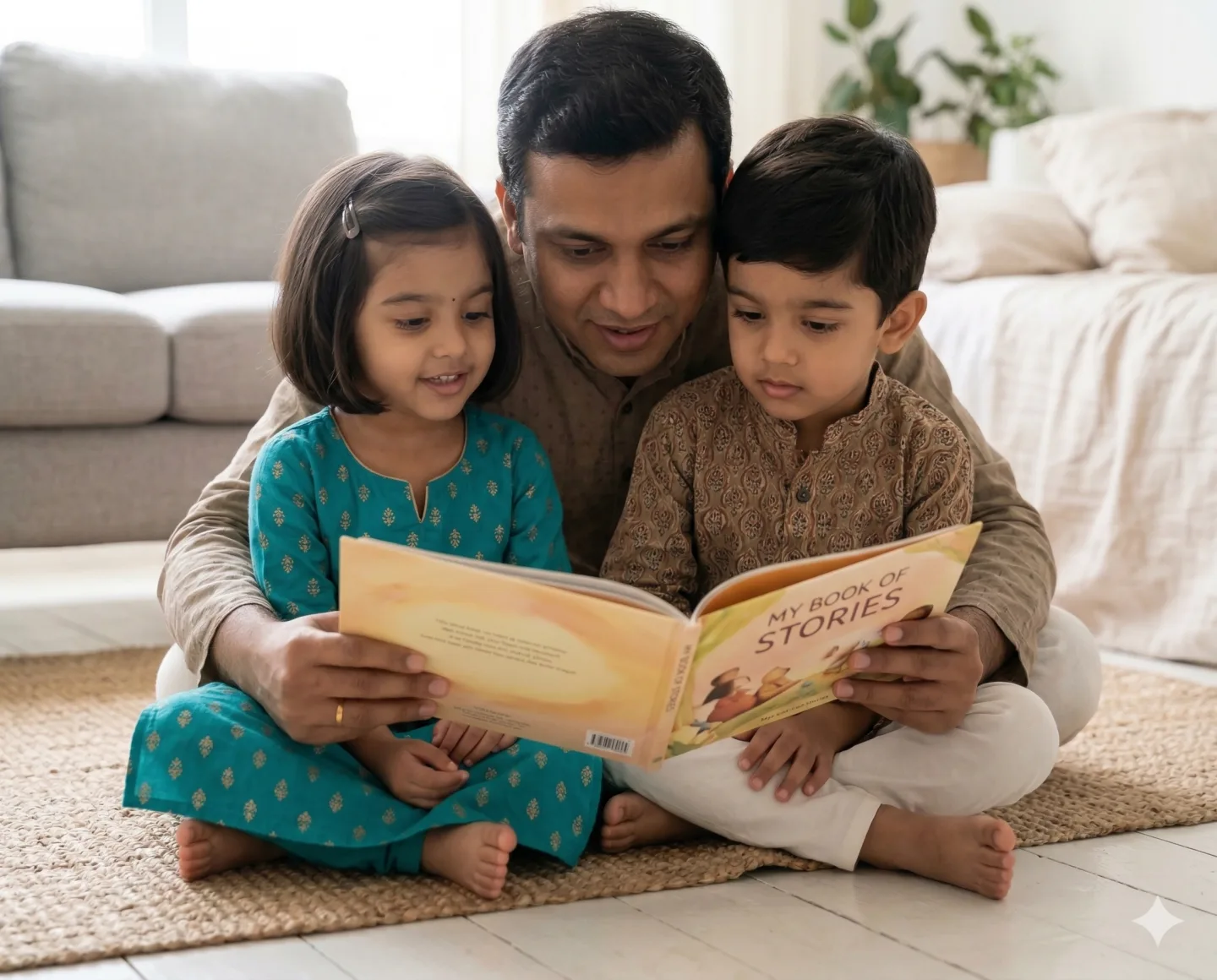
Storytelling is one of the oldest and most powerful learning tools in human history - and one of the most underestimated by modern parents. The simple act of telling and listening to stories delivers developmental benefits that are difficult to replicate any other way. This guide explains what those benefits are, at which ages they matter most, and how to bring more storytelling into your child's daily life without any special preparation.
What storytelling does for a child's brain
When a child hears a story - or tells one - multiple brain systems activate simultaneously. Language processing, emotional recognition, memory consolidation, and imagination all engage together. This makes storytelling one of the most cognitively complex and enriching activities a child can do, precisely because it does not feel like work.
Language development
Storytelling builds language in four distinct ways that complement but exceed what conversation alone can provide:
- Narrative vocabulary - words like suddenly, meanwhile, eventually appear almost exclusively in stories. Children who hear and tell stories frequently acquire these words earlier, which directly improves their ability to write and speak in structured ways at school.
- Sentence complexity - stories require longer, more structured sentences than conversation. A child narrating a story naturally uses clauses and conjunctions more grammatically rich than their everyday speech.
- Listening comprehension - following a story requires holding multiple details and characters in mind simultaneously. This is the same skill required for following classroom instructions.
- Expressive range - stories explore emotions and motivations that ordinary conversation rarely touches. Children who tell stories develop a wider emotional vocabulary.
Empathy and emotional intelligence
Stories are empathy machines. Every time a child asks why did the character do that or how do you think they felt, they are practicing perspective-taking - the cognitive skill that underlies emotional intelligence. This is why the questions you ask around stories matter as much as the stories themselves. Moving beyond what happened next to why do you think she was sad is the move that converts passive story reception into active empathy development.
Imagination and creative thinking
Imagination is not a soft skill - it is the foundation of problem-solving and innovation. A child who can construct a story in their mind - placing characters in settings, generating problems, and finding resolutions - is practicing exactly the same cognitive moves that underlie creative and strategic thinking. When children make up stories, they engage in what psychologists call counterfactual thinking - the ability to imagine situations that are not real - which is associated with better planning and greater flexibility in problem-solving.
How to bring more storytelling into daily life
- Tell stories from your own childhood. Children are captivated by stories about their parents as children. These stories also transmit family history and values - which research links to resilience in children.
- Ask for stories, not just summaries. Instead of what did you do at school, ask: tell me the most interesting thing that happened today as a story - give it a beginning, middle, and end.
- Use the story spine structure. Give your child a sentence to complete: Once upon a time... Every day... Until one day... Because of that... Until finally... This structure teaches narrative arc without explicit instruction.
- Let them change the ending. After reading a familiar story, ask: what if the wolf had been friendly? This develops both imagination and causal reasoning simultaneously.
- Make commute time story time. Ten minutes in the car is a perfect story window. You tell one, then they tell one. No screens, no preparation, no materials.
| Age | What they can do | What to try |
|---|---|---|
| 3–4 years | Retell simple 3-part stories | Read the same book many times; ask them to tell it back |
| 4–5 years | Add detail and character motivation | Ask why and how did they feel questions |
| 5–7 years | Create original stories with plot | Story spine; make up stories together |
| 7–10 years | Sustain complex narratives | Encourage voice recordings or written stories |