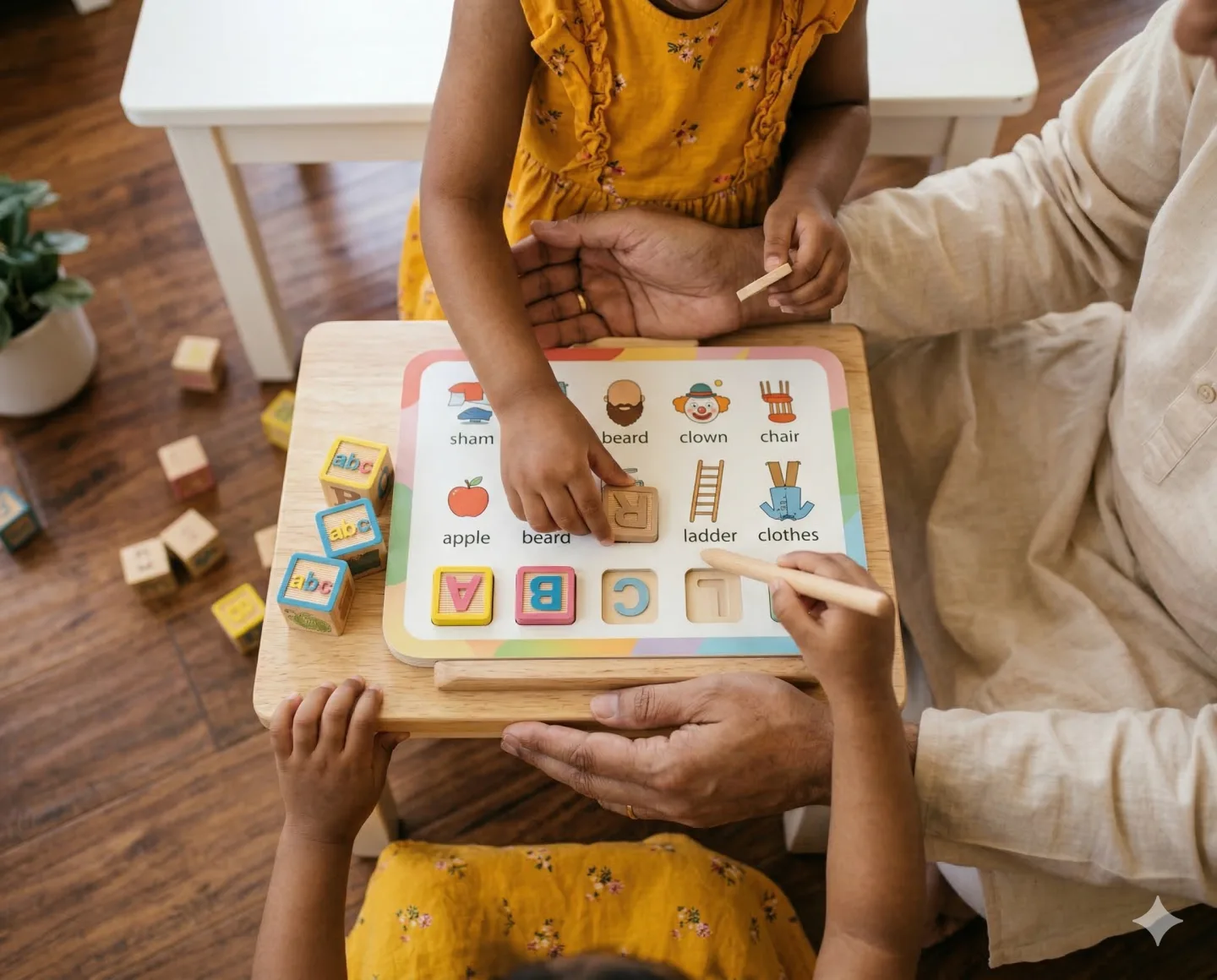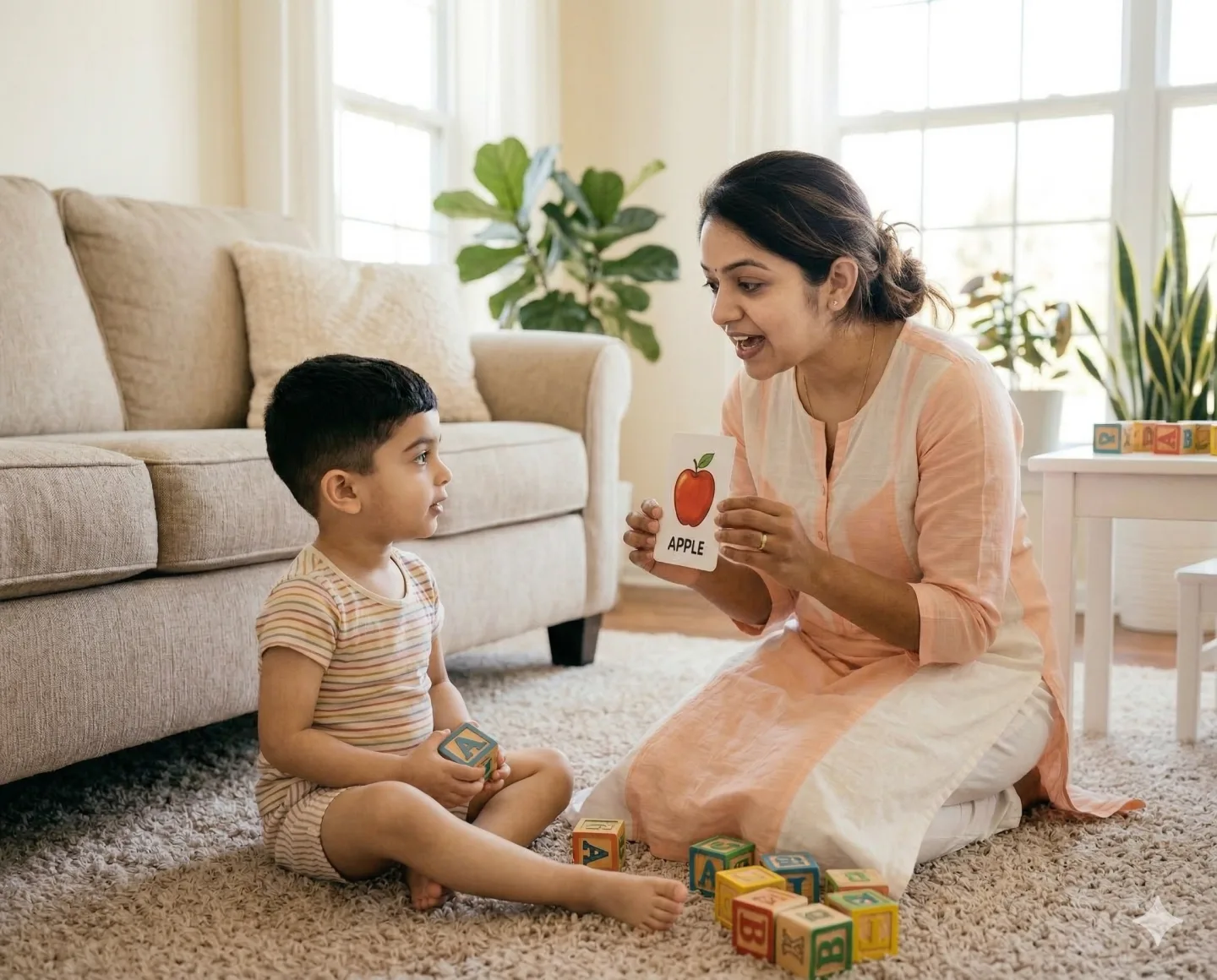
India is a uniquely rich language environment for children - most families speak more than one language at home, grandparents tell stories in regional languages, and children navigate between Hindi, English, and mother tongue before they start school. Yet despite this richness, many Indian parents feel uncertain about how to actively support their child's language development at home.
Why home is the most important language classroom
Research from Harvard's Center on the Developing Child consistently shows that the language environment at home in the first eight years of life is a stronger predictor of a child's language ability than the quality of their school. For Indian parents, the rich multilingual environment is a significant developmental advantage. Children who grow up with multiple languages develop stronger cognitive flexibility, better working memory, and more sophisticated metalinguistic awareness than monolingual peers.
The biggest language mistakes Indian parents make - and how to avoid them
- Switching to English too early and exclusively. Strong mother tongue foundations actually accelerate English acquisition, not hinder it. A rich vocabulary in any language transfers to the next.
- Relying on school to do all the language work. School provides structure, home provides volume and warmth. The quantity of language interaction at home cannot be replicated in a classroom.
- Using screens as a substitute for conversation. Children need interactive language, not passive exposure. The serve-and-return of real conversation builds neural connections that television cannot.
- Correcting pronunciation and grammar too harshly. Children who fear being wrong speak less, which slows development. Prioritise fluency and confidence over correctness in early years.
What Indian parents can do every day
- Talk with your child, not at them. Conversation - serve-and-return interaction - is the most powerful language-building activity available. Every exchange builds new neural connections. Instructions and one-way narration do not produce the same effect.
- Use your mother tongue confidently. Strong first-language development supports second-language acquisition. A child with rich vocabulary in Tamil, Marathi, Bengali, or Hindi will transfer those skills to English more rapidly. Speak in the language you are most fluent and emotionally expressive in.
- Bring grandparents and extended family into language life. Grandparents are the most fluent storytellers, keepers of folk tales, songs, and proverbs. Children who interact regularly with grandparents develop richer, more varied language than those who do not.
- Read aloud in any language every day. Reading aloud is the single most evidence-backed activity for building vocabulary and language comprehension. In India, parents sometimes feel they cannot read English books confidently - but reading in Hindi, Marathi, Tamil, or any regional language is equally valuable.
- Turn daily routines into language opportunities. Cooking, commuting, shopping, bathing - these are not interruptions to language development, they are the setting for it. Narrate what you are doing. Ask your child to predict what comes next. Environmental language enrichment builds vocabulary through real-world context.
- Ask open questions, not closed ones. Closed questions (Did you eat? Did you enjoy school?) require one-word answers. Open questions (What was the funniest thing that happened today? What do you think we should make for dinner and why?) require the child to construct sentences and express opinions.
- Use Omli Kids for daily English speaking practice. For Indian families where English is a second or third language, Omli Kids engages children in daily English conversations tailored to their age and interests, building spoken English confidence through interaction rather than instruction.
Key insight: You do not need to be a language expert to raise a child with strong language skills. You need to talk with them, read with them, and take their words seriously. The research on what works is remarkably consistent - and it points to everyday interaction, not structured programmes.