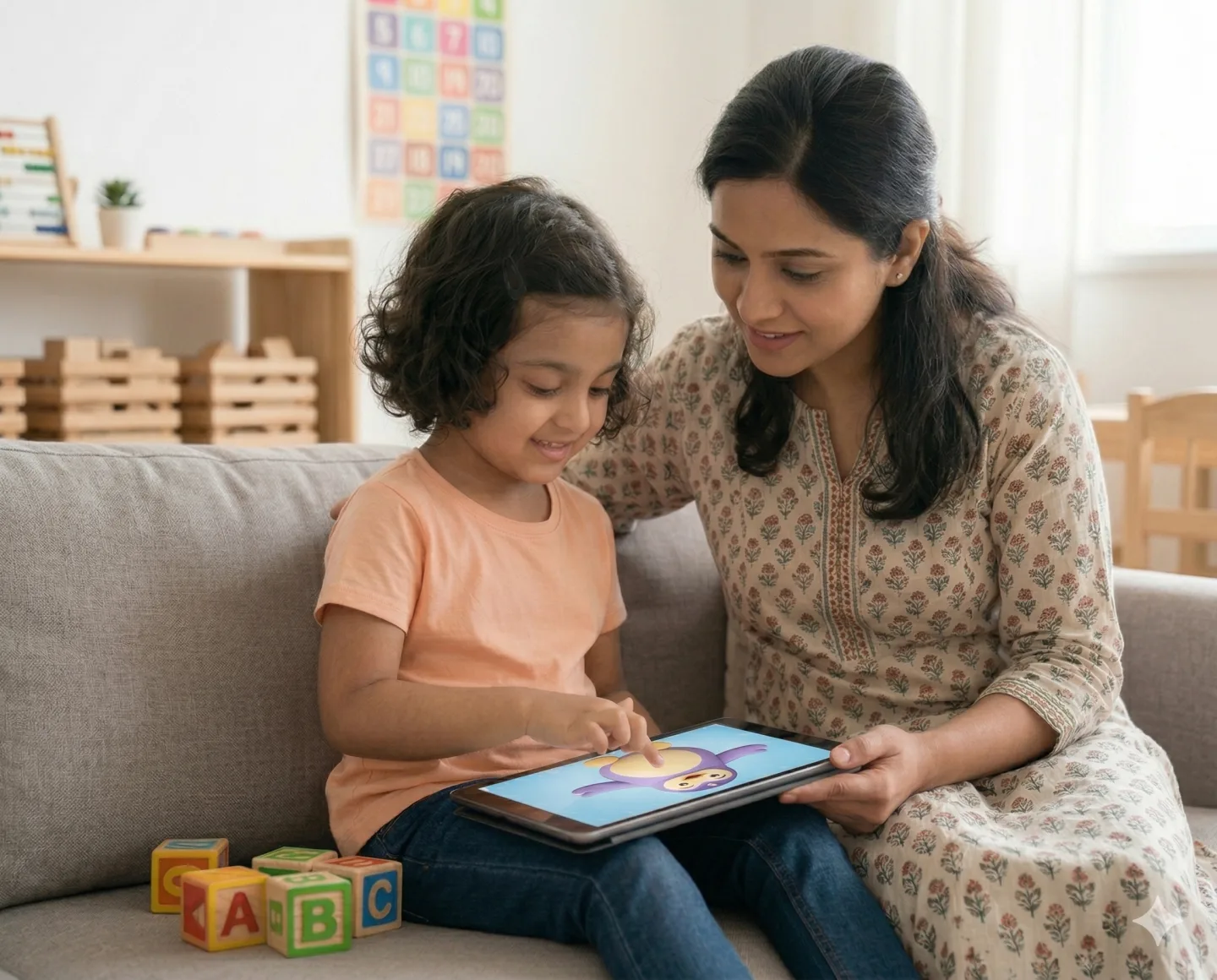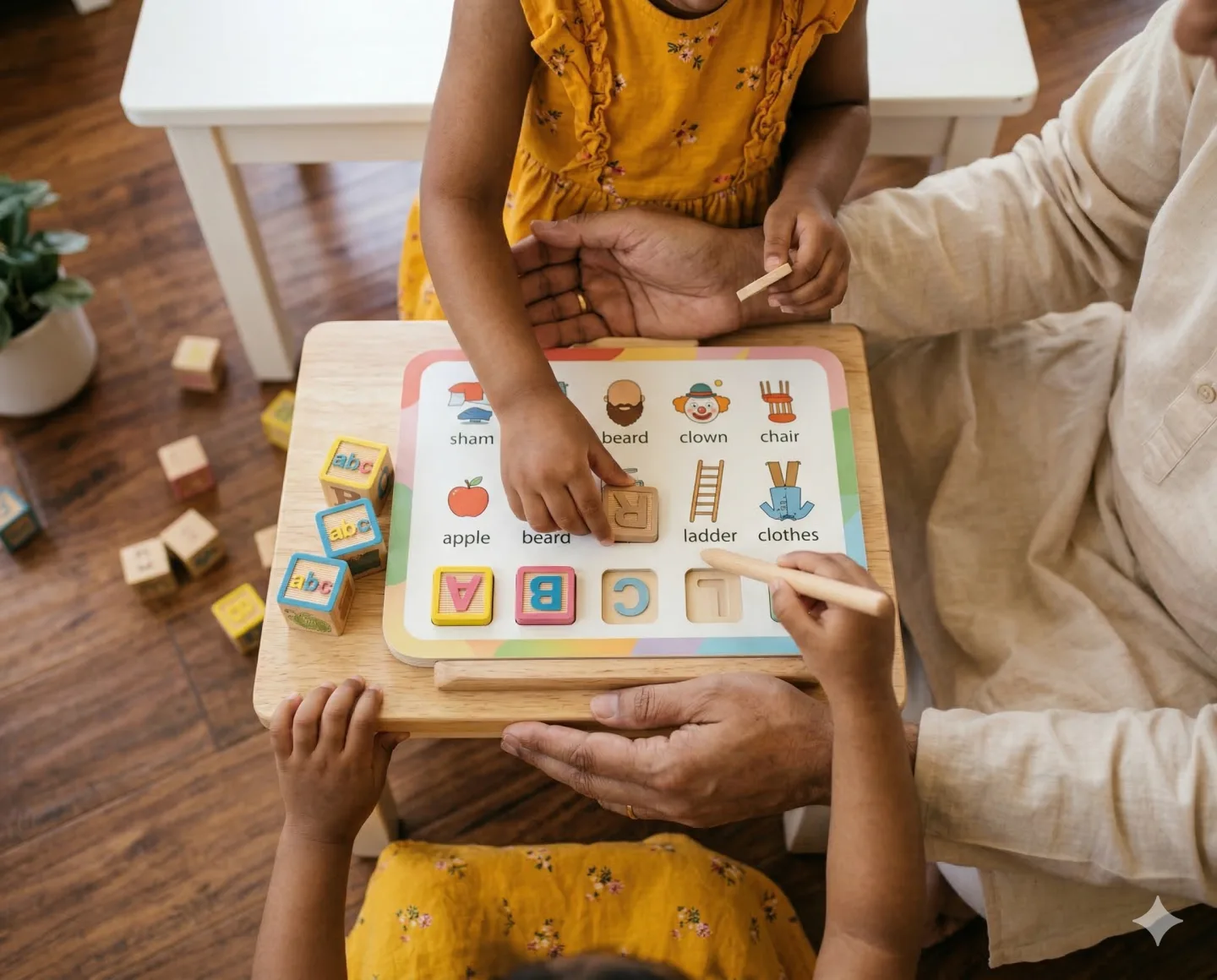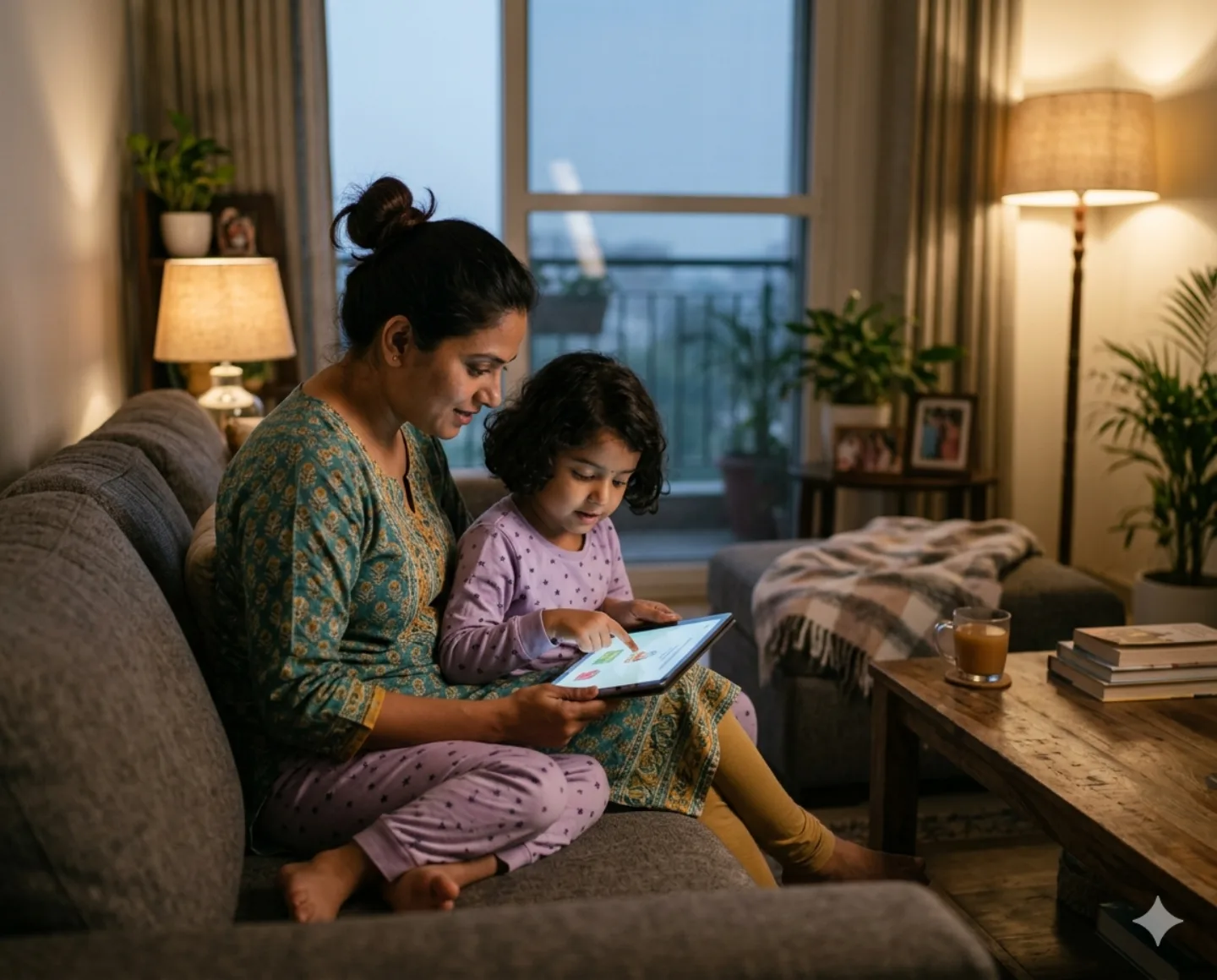
Indian parents have never had more choice in children's learning apps - and never had a harder time knowing which ones are actually worth their child's time. This guide reviews the leading categories of learning apps available in India for children aged 3-8, and explains what the research says about which types of apps produce real developmental benefits.
What makes a learning app genuinely educational?
Research points to four features that distinguish apps that produce real learning from those that produce engagement without development:
- Active engagement. The child must respond, choose, or produce rather than passively receive. Watching a character solve a problem is not the same as solving it.
- Adaptive difficulty. The app responds to the child's level and adjusts accordingly. A fixed difficulty level either bores or overwhelms.
- Meaningful feedback. When a child makes an error, the app helps them understand why rather than simply marking wrong. Feedback that builds understanding is qualitatively different from feedback that marks performance.
- Connection to real learning goals. Content develops skills that transfer beyond the app itself. If the skills learned in-app do not appear in the child's broader behaviour and thinking, the app is not doing educational work.
Apps that score well on all four are rare.
Categories of learning apps and what they are best for
Reading and literacy apps
These apps focus on phonics, letter recognition, and early reading. The category has the strongest evidence base among children's apps. Best for ages 4-7. Strong performers include phonics-based apps with systematic letter-sound instruction that build decoding skills step by step.
Maths and numeracy apps
These range from basic number recognition for 3-4 year olds to complex operations for older children. The best ones use visual and interactive representations rather than drill. Apps that connect abstract symbols to concrete visual models produce stronger number sense than those that focus on speed and repetition.
Science and curiosity apps
These explore nature, physics, and how things work. They score highly on engagement but vary in educational depth. Look for apps that invite prediction and observation rather than simply presenting information - the difference between being a scientist and watching one.
Thinking, speaking, and language apps
The most underserved category in the Indian market. Apps that develop spoken language, reasoning, and expressive ability address the skill gap most consistently identified by Indian employers and educators. Omli Kids occupies this category as India's first AI-powered thinking and speaking platform for children aged 3-10.
Creative and open-ended apps
Drawing, storytelling, and music apps with genuine creative latitude build imagination, self-expression, and executive function. They work best as complements to more structured tools rather than as standalone learning solutions.
What to look for when choosing an app for your child
| Criteria | Green flag | Red flag |
|---|---|---|
| Interactivity | Child must respond and produce | Child mainly watches |
| Feedback | Explains why, guides improvement | Just says wrong, try again |
| Adaptation | Adjusts to child's level | Same difficulty for all children |
| Screen design | Clean, minimal, age-appropriate | Loud, flashy, reward-heavy |
| Data practices | Transparent privacy policy | Vague or no privacy information |
| Parent visibility | Dashboard with usage and progress | No parent features |
A note on app store ratings
App store ratings measure user satisfaction, not educational effectiveness. An app optimised for engagement may produce little developmental benefit. Ratings above 4.5 stars on children's apps are nearly universal and should be treated as a hygiene factor rather than a differentiator. Use the framework above to evaluate apps independently of their store rating.
How Omli Kids fits into a balanced app diet
Omli Kids does not teach reading, maths, or subject knowledge - and it does not try to. Its focus is on thinking and speaking skills that underpin all other learning: expressive language, reasoning, curiosity, and confidence. Used for 10-15 minutes daily alongside a reading app and occasional maths practice, Omli Kids addresses the skill gap that most educational apps leave entirely unfilled.
Key insight: No single app is a complete education. The best approach is a small number of high-quality apps that address different skill areas - literacy, numeracy, thinking and speaking - used consistently and in short daily sessions rather than occasionally and for long periods.