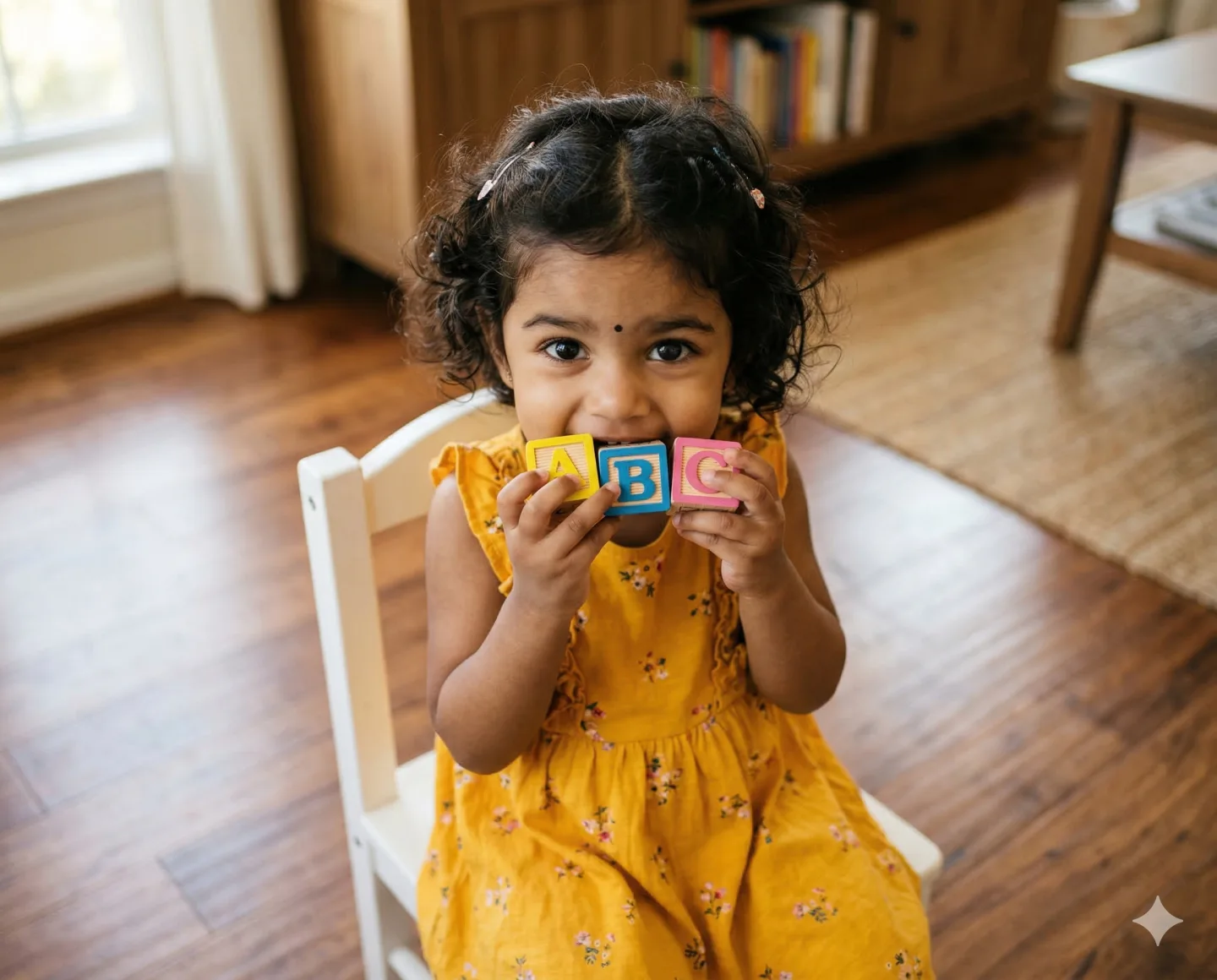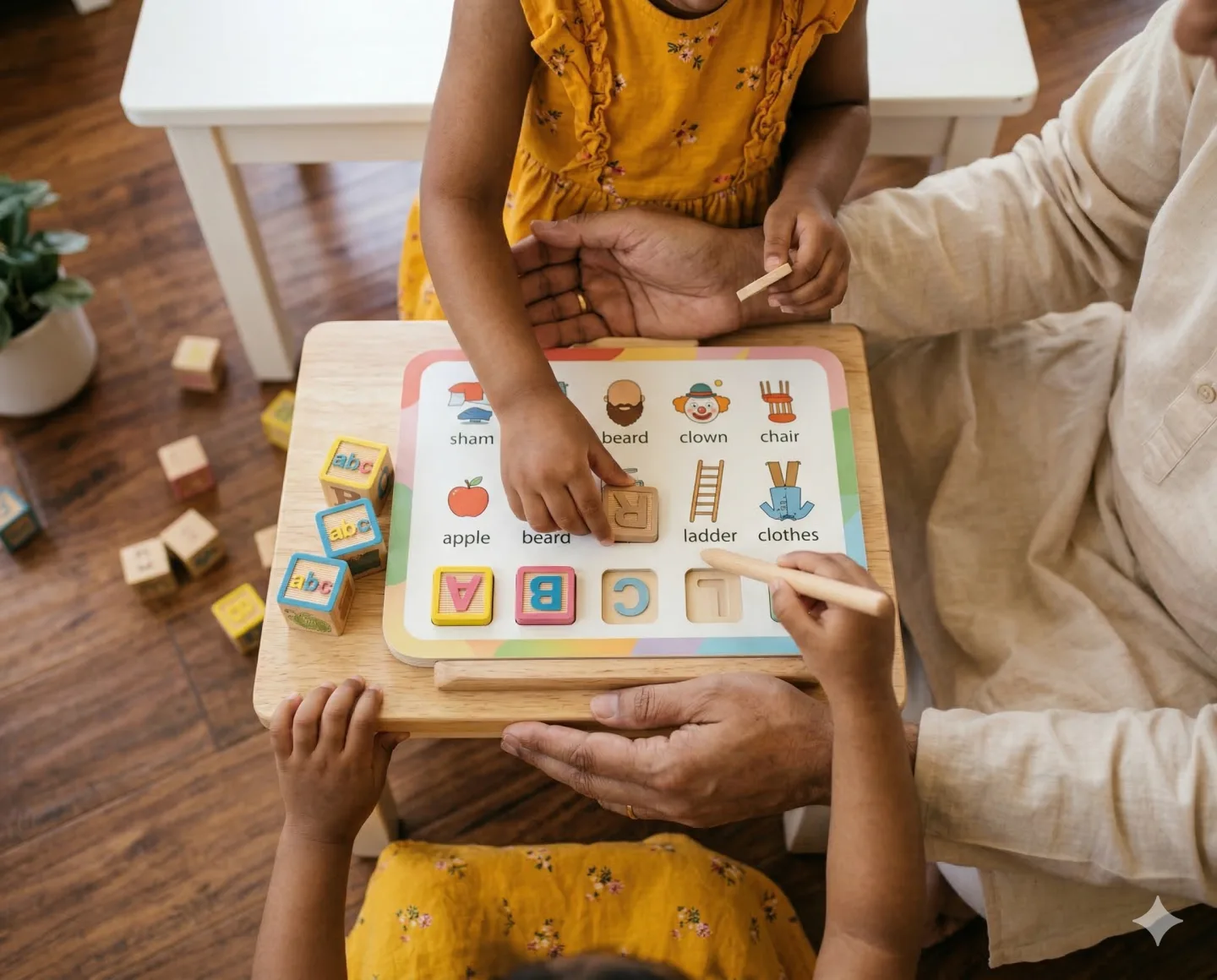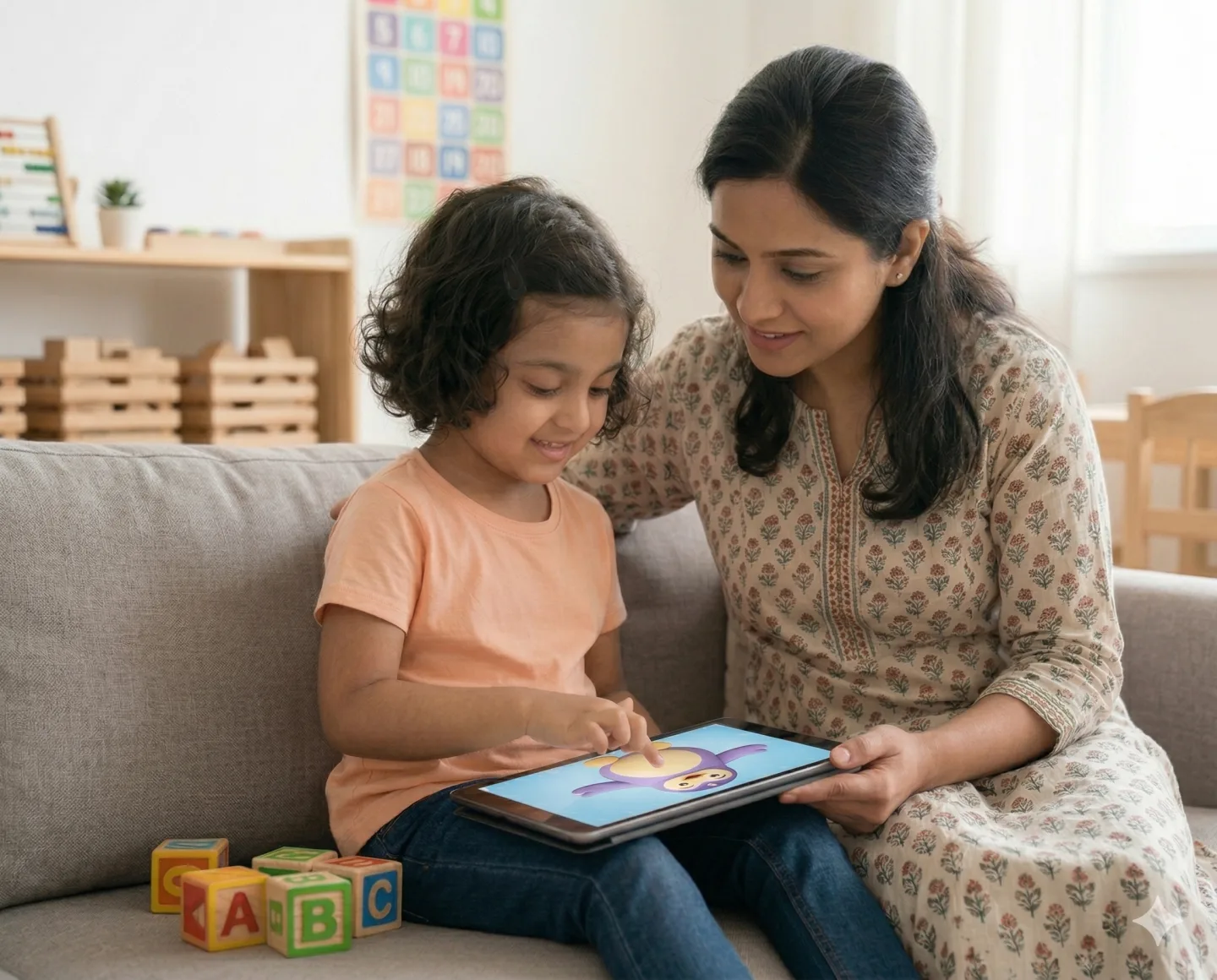
Critical thinking in children is the ability to examine information, ask meaningful questions, consider different possibilities, and reach reasoned conclusions - rather than simply accepting what they are told. It is one of the most sought-after skills in the modern world, and the research is clear: its foundations are built before a child turns five, not in a secondary school classroom.
What critical thinking actually means for young children
When most people hear "critical thinking", they picture a student analysing an argument or a lawyer dissecting evidence. But for a three-year-old, critical thinking looks quite different. It looks like asking "why" for the fifteenth time in an hour. It looks like refusing to accept that the sky is blue without understanding why. It looks like insisting that the story does not make sense because tigers do not live in the garden.
These are not annoying behaviours - they are early critical thinking in action. Young children are natural hypothesis testers. They observe the world, form theories, test them against experience, and revise them when they are wrong. The question for parents is not whether their child can think critically, but whether the environment around them nurtures or suppresses that natural drive.
Why ages 3 to 5 are the critical window
Brain development research from the Center on the Developing Child at Harvard University shows that the neural circuits associated with reasoning, planning, and evaluation are developing at their fastest rate between birth and age five. These circuits are shaped by experience - the conversations a child has, the problems they are encouraged to solve, the questions they are allowed to ask.
A child who learns to question, reason, and reflect between ages 3 and 5 brings those habits to every subject they encounter for the rest of their education.
The 5 core components of critical thinking in early childhood
1. Questioning
The willingness to ask "why", "how", and "what if" is the entry point to critical thinking. Children who feel safe asking questions - and who receive genuine, engaging responses - develop stronger reasoning habits than those whose questions are shut down or dismissed.
2. Observation
Critical thinking begins with noticing. Young children who are encouraged to describe what they see, hear, and feel in detail are building the observational skills that underpin all scientific, mathematical, and literary thinking.
3. Comparison and classification
Sorting objects, comparing stories, noticing what is the same and what is different - these are the foundational activities of logical reasoning. Even sorting toys by colour or size is early critical thinking.
4. Cause and effect reasoning
Understanding that actions have consequences - that pushing a tower causes it to fall, that being unkind causes a friend to feel sad - is an early form of analytical reasoning. This skill, when developed well, becomes the basis for ethical thinking, scientific reasoning, and strategic planning.
5. Perspective-taking
The ability to consider that someone else might see a situation differently is a higher-order thinking skill that begins developing around ages 3–4. It underlies empathy, collaboration, and the ability to evaluate arguments from multiple angles.
How critical thinking differs from intelligence or academic ability
Critical thinking is often conflated with being "smart", but they are not the same. A child can have a very high IQ and still be a poor critical thinker - if they have been rewarded throughout childhood for giving correct answers quickly rather than for thinking through problems carefully.
Equally, a child who does not perform strongly on academic measures can be an excellent critical thinker if their environment has encouraged curiosity, persistence, and reflection. Critical thinking is a habit of mind. Like any habit, it is shaped by repetition and environment far more than by innate ability.
Signs your child is developing critical thinking naturally
- They ask questions that you do not immediately know the answer to
- They notice inconsistencies in stories ("But you said yesterday that...")
- They argue their point when they disagree, rather than simply giving in
- They come up with alternative explanations for things they observe
- They ask to hear the other side of an argument
- They change their mind when given a good reason
How parents can build critical thinking through daily conversation
The most effective tool for building critical thinking in young children is not a worksheet or a puzzle - it is conversation. Specifically, the kind of conversation that pushes children to reason rather than recall.
- Replace closed questions with open ones. "What colour is that?" tests memory. "What do you think would happen if everything was the same colour?" builds reasoning.
- Invite disagreement. "I think dogs are better pets than cats. Do you agree?" gives a child a safe arena to practise marshalling an argument.
- Think aloud. When you are deciding something - what to cook, which route to take - narrate your reasoning. You are modelling critical thinking in real time.
- Let them be wrong without correcting immediately. When a child makes an incorrect prediction, ask: "What happened? Was that what you expected? Why do you think it turned out differently?" This is more powerful than providing the right answer.
- Read stories that raise moral or logical dilemmas. Stories where characters face difficult choices create natural opportunities for critical analysis. "What would you have done? Was the character right?"