Most Indian parents spend enormous energy ensuring their children can recite multiplication tables, spell correctly, and memorise answers for exams. Very few spend equivalent energy on problem-solving - the skill that will determine how useful all that memorised knowledge actually becomes.
What is problem-solving in early childhood?
It is the ability to encounter a challenge - a toy that will not work, a disagreement with a friend, a block tower that keeps falling - and generate, test, and evaluate possible solutions rather than giving up or waiting for an adult to fix it. This process involves:
- Identifying the problem
- Generating possible responses
- Choosing the most promising one
- Acting on it
- Evaluating the result
- Adjusting based on what happened
Why problem-solving matters more than memorisation
Memorisation has genuine value but the Indian education system prioritises it above all else. A child who memorised the formula but cannot reason spatially has knowledge without transferable skill.
Key insight: Memorisation stores information. Problem-solving puts it to work. Both matter - but the research consistently shows that problem-solving skills built in early childhood provide the infrastructure that makes all later learning more effective.
How problem-solving develops from ages 3 to 8
| Age | Problem-solving behaviour | What supports it |
|---|---|---|
| 3-4 years | Trial and error; simple cause-effect testing | Unstructured play with open-ended materials |
| 4-5 years | Tries multiple approaches; asks for help strategically | Resist rescuing; ask what else could you try? |
| 5-6 years | Plans before acting; can explain their reasoning | Pose problems with no single solution |
| 6-8 years | Systematic approach; evaluates and adjusts | Strategy games; real-world problem discussions |
What builds problem-solving at home
Let them struggle productively
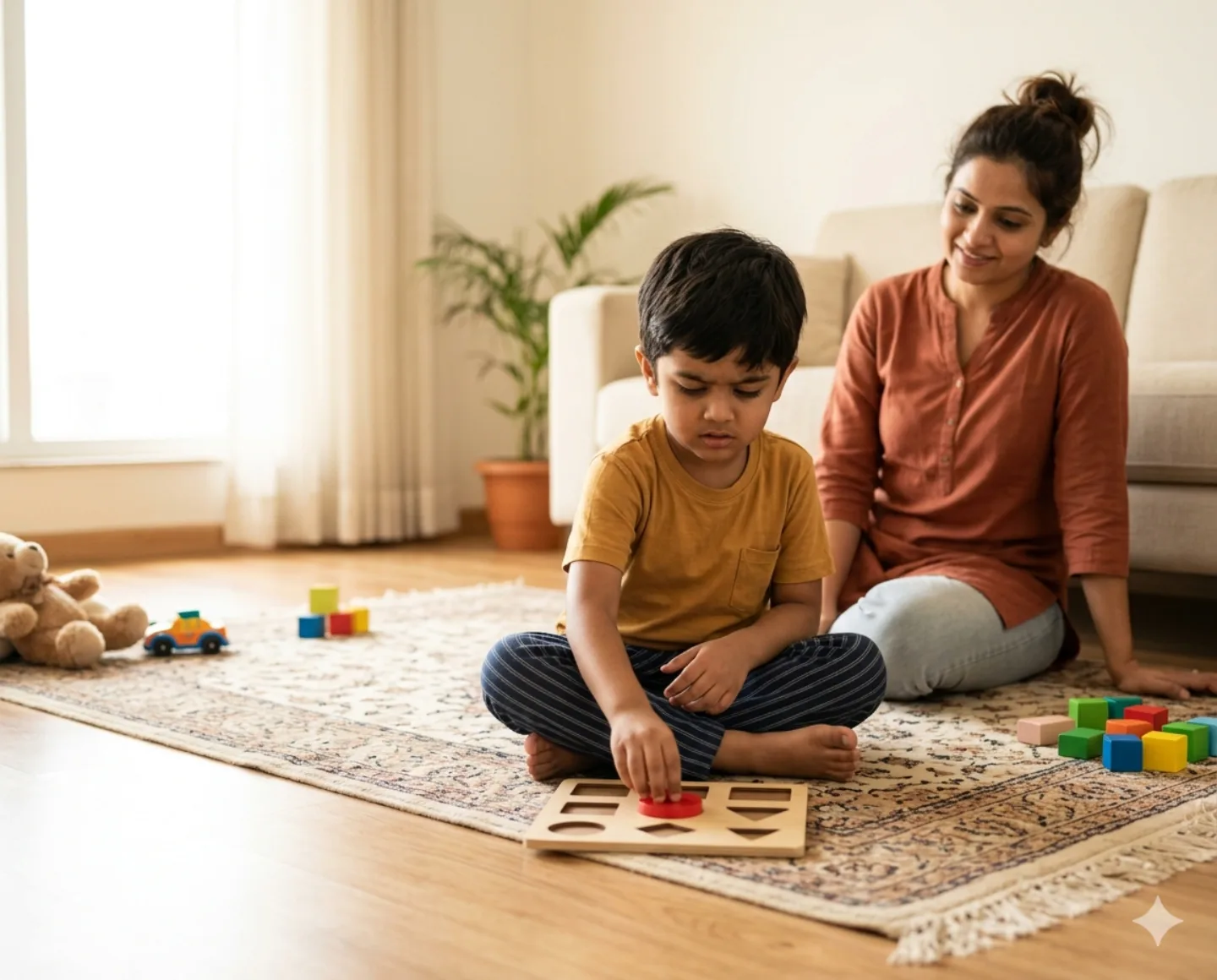
Productive struggle means being challenged enough to work hard but not so overwhelmed that the child shuts down. This zone is where real problem-solving capacity is built. When a parent steps in too quickly, they remove the very experience that builds the skill.
Ask process questions not answer questions
Replace solution-focused questions with process-focused ones: What have you tried so far? What could you try next? Why do you think that did not work? These questions guide without solving, and they train the child to ask the same questions of themselves.
Give open-ended materials
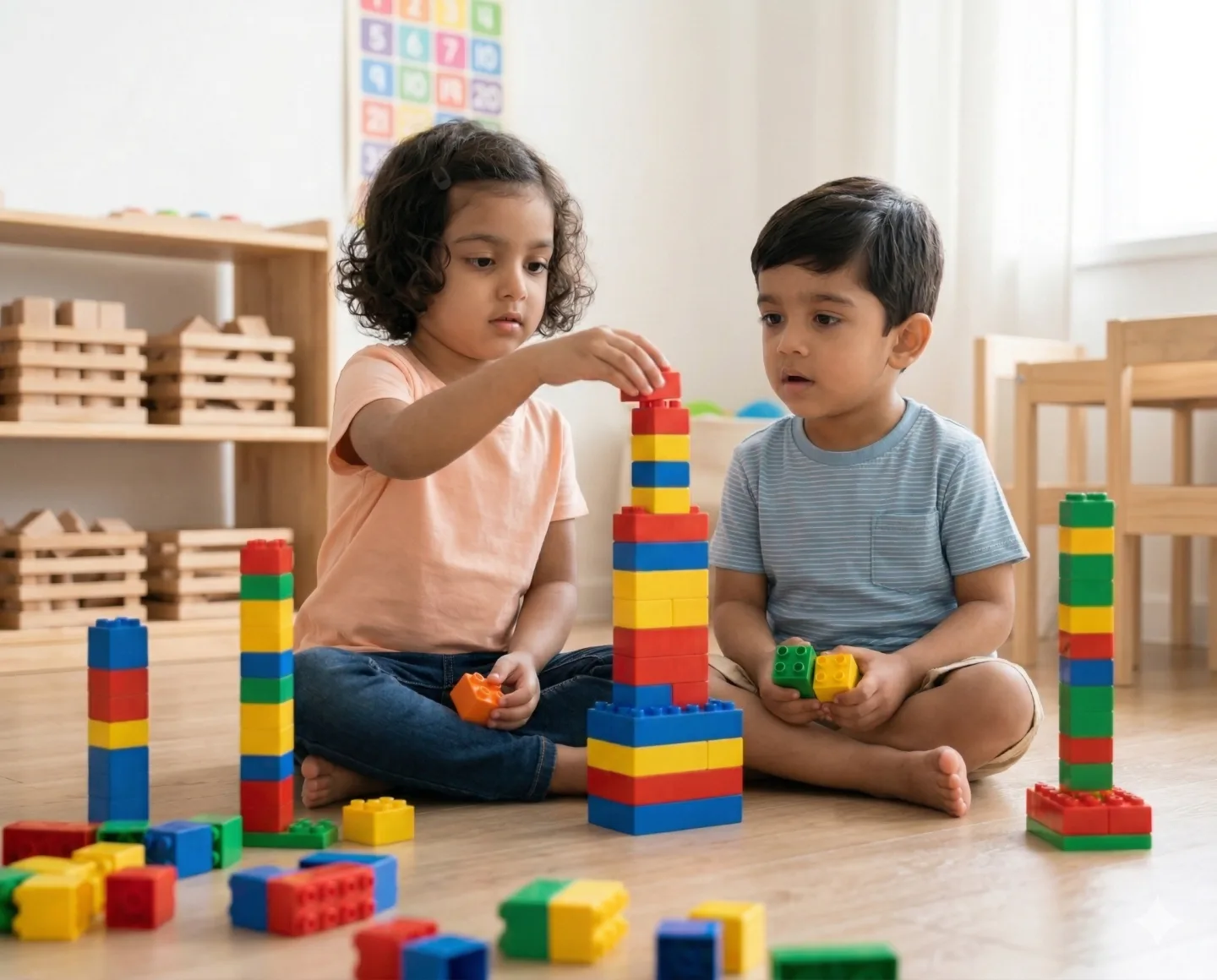
Blocks, clay, sand, cardboard, and water are among the most effective problem-solving tools available to parents. Unlike toys with predetermined outcomes, open-ended materials require the child to define the problem and invent the solution.
Involve them in real household problems
Questions about groceries, furniture arrangement, or daily logistics - children aged 5 and above can contribute genuinely. Involving them in real problems signals that their thinking is valued and gives them practice with problems that have real stakes and no single correct answer.
Use Omli Kids for daily problem-posing
Omli Kids poses open-ended thinking challenges through adaptive AI conversation, giving children daily practice generating and evaluating responses to novel problems - without the pressure of a right answer.
What undermines problem-solving development
- Solving problems for children before they have had time to attempt them
- Focusing exclusively on correct answers rather than reasoning processes
- Environments with no uncertainty, challenge, or open-ended tasks
- Criticism of wrong attempts rather than curiosity about the reasoning behind them
- Passive screen time that requires no decision-making or evaluation