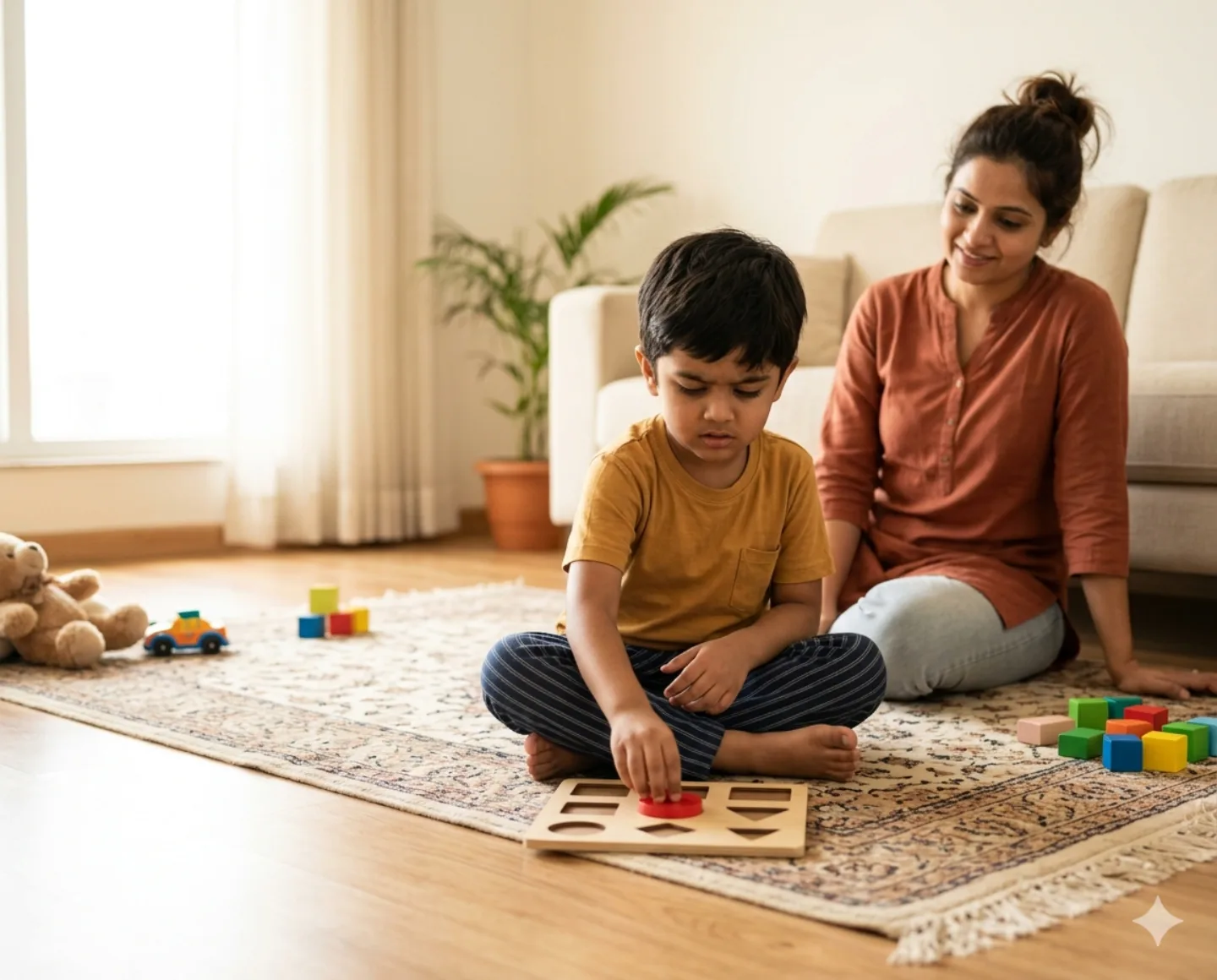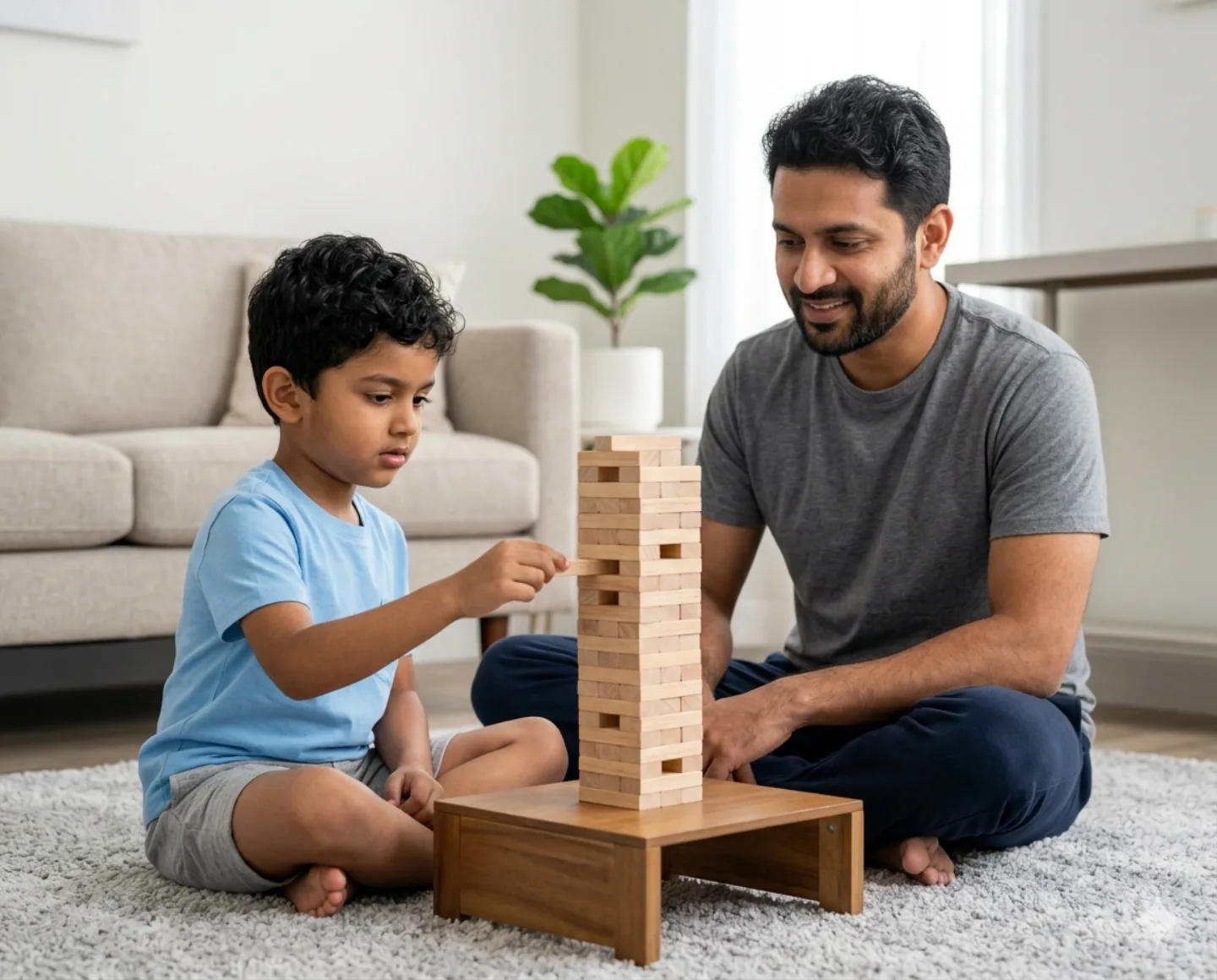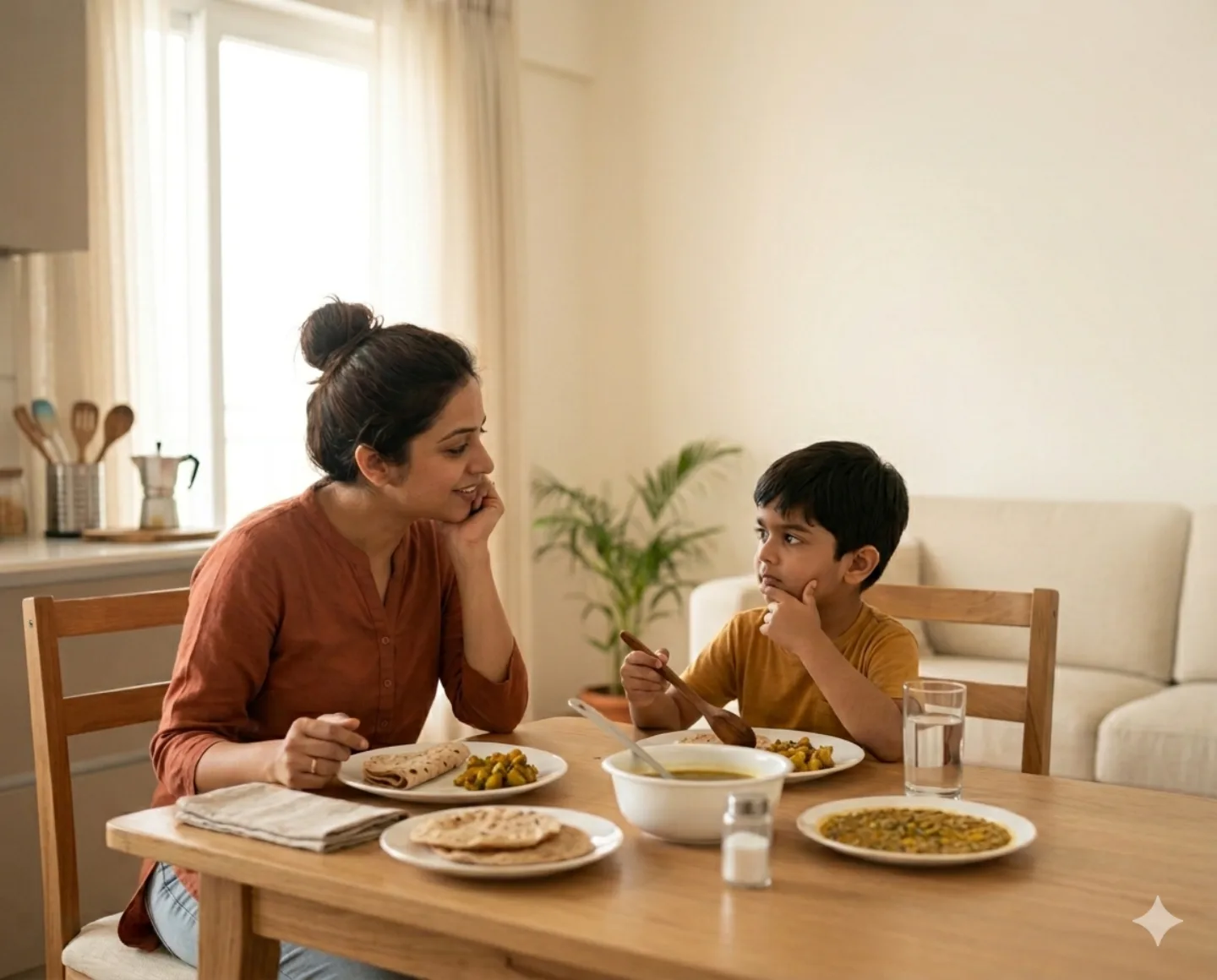
The single most powerful thing a parent can do to develop their child's thinking is also the simplest - and the most consistently underused. It is asking better questions. The quality of the questions you ask your child every day shapes the quality of the thinking they develop over years.
Why most parent questions do not build thinking
Most questions fall into closed questions that test recall, or conversational check-ins requiring minimal cognitive effort. None of the following are harmful, but a child whose daily diet consists mainly of these is not building reasoning, evaluation, and language skills.
| Common parent questions | What they actually require |
|---|---|
| "What colour is this?" | Recall of a label |
| "How was school?" | A one-word summary |
| "Did you enjoy that?" | A yes or no |
| "What is 5 plus 3?" | Recall of a memorised fact |
| "Are you hungry?" | Internal check, one-word answer |
The four types of questions that build thinking
1. Prediction questions
What do you think will happen if...? What might happen next? Prediction questions require causal reasoning - the child must model a situation and anticipate outcomes. Try them with everyday moments: what do you think will happen to the ice cream if we leave it out of the freezer? What do you think the character will do next? What might happen if we plant this seed?
2. Reasoning questions
Why do you think that? How do you know? What makes you say that? The explanation is where the cognitive work happens. When a child articulates their reasoning, they consolidate and examine it. Try: why do you think that one is better? What is making you feel that way? How did you figure it out?
3. Comparison questions
How are these the same? How are they different? Which do you think is better and why? Comparison questions require classification, evaluation, and language. They work across almost any content: compare two characters in a story, two toys that make noise, or two things you had for lunch this week.
4. Hypothetical questions
What if things were different? Hypothetical questions invite counterfactual thinking - the foundation of creativity, empathy, and strategic planning. Try: what would you do if you found an injured bird? What would the world be like if there were no cars? If you could change one rule at school, what would it be and why?
How to upgrade your daily conversations
You do not need to redesign your parenting approach. You need to add one better question per exchange.
| Instead of stopping here... | Add this follow-up |
|---|---|
| "How was school today?" | "What was the most interesting thing that happened and why?" |
| "Did you like the book?" | "What would you have done differently if you were the character?" |
| "What do you want for dinner?" | "Why do you prefer that one - what is it about it you like?" |
| "Go to sleep now." | "What are you going to think about as you fall asleep tonight?" |
| "Good job!" | "What part was hardest and how did you figure it out?" |
Age-appropriate questioning
| Age | Best question types | Example |
|---|---|---|
| 3-4 years | Simple prediction and observation | "What do you think is inside this box?" |
| 4-5 years | Reason for preferences and choices | "Why do you like that one better?" |
| 5-7 years | Cause and effect, comparison | "Why do you think that happened?" |
| 7-10 years | Hypothetical, ethical, evaluative | "What would you do if you saw someone being unkind?" |
Key insight: The goal of better questioning is not to put children on the spot - it is to signal that their thinking is interesting and worth developing. Children who are asked good questions become children who ask good questions of themselves.